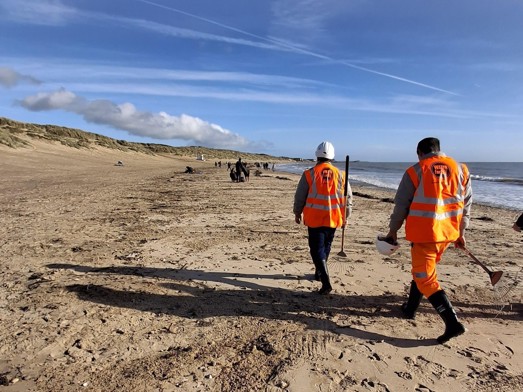


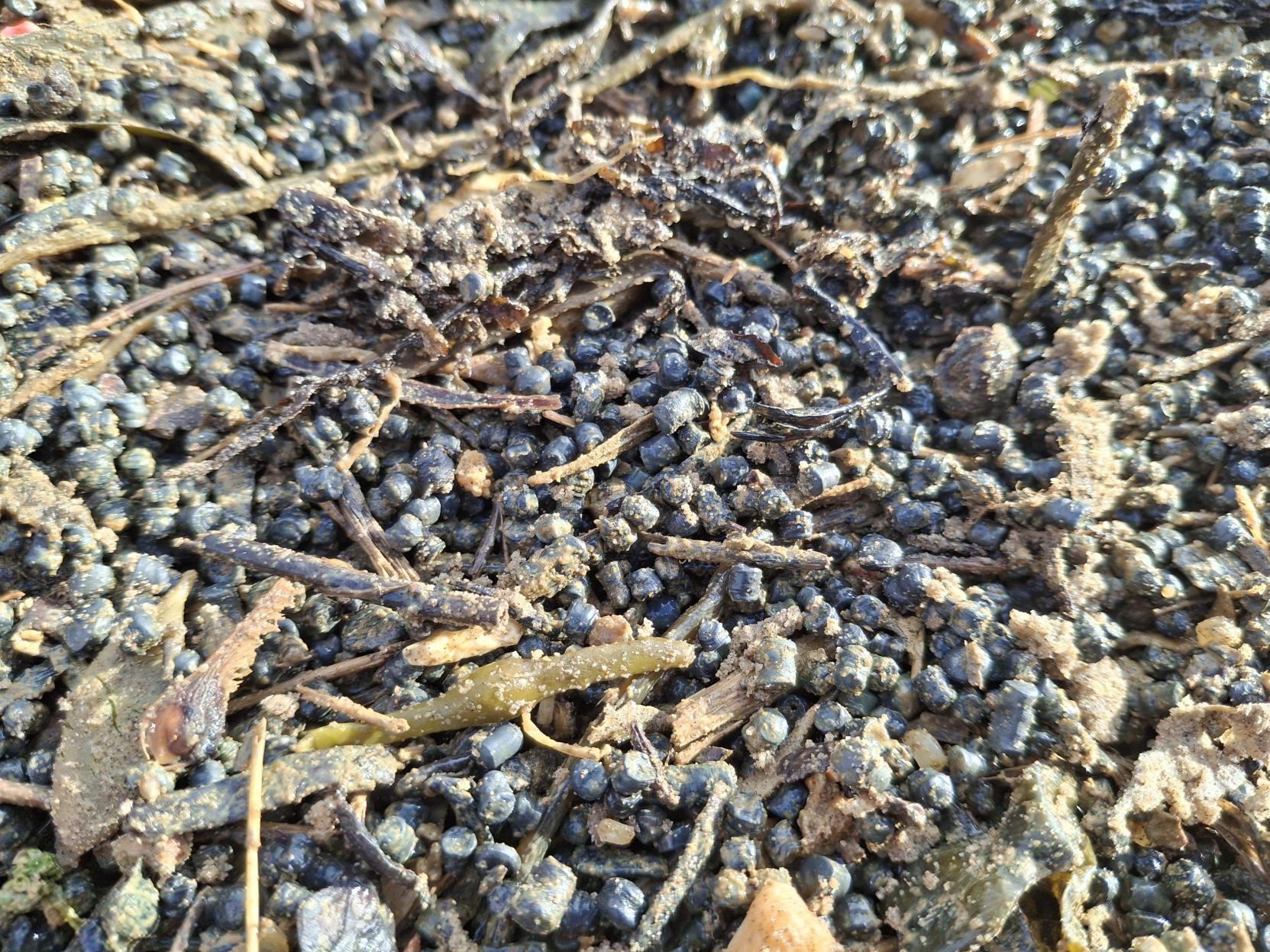
Beads washed ashore at Camber Sands
We are continuing our investigation into the beads that have washed ashore at Camber Sands. We'll share updates as soon as more information becomes available.
Latest update
Update on bead recovery at Eastbourne
Our teams have been working on site, including draining a large tank over the past 24 hours. We’ve found far more beads remaining in the system than expected. This means fewer beads — less than 10 tonnes — entered the sea.
We’re updating our tidal modelling to understand how these beads may have moved after leaving the site. This will guide our ongoing clean-up work with specialist contractors.
Important to know:
The beads are non-toxic, non-hazardous, and chemically stable. They pose no risk to water quality and are safe to touch — but, like any plastic, they shouldn’t be swallowed.
Our teams will continue monitoring the coastline over the coming weeks. If you spot any beads, please report them:
- On our website.
- Via Facebook or X.
- By calling 0330 303 0368.

Your questions answered...
On Thursday 7 November 2025, we were notified of a large number of plastic beads washing up on Camber Sands beach in East Sussex. Inspections at our wastewater treatment works in Sussex have found a damaged filter screen on a tank at our Eastbourne site — 30 miles to the west — and evidence of loose beads in the works.
Our latest investigations indicate less than 10 tonnes were released. We’re reviewing tidal modelling to understand their movement and plan clean-up operations.
Our investigation is ongoing, but it appears that during storm conditions on 29 October 2025, a surge caused significant turbulence on site and the failure of the screening filter allowed the beads in the tank to be pumped into the sea via the long-sea outfall, more than 3km offshore.
We believe as the beads were released far offshore, it took some days for them to wash up on the beach with the tides and they were eventually carried on to Camber Sands on a heavy spring tide.
As soon as we received reports of beads on the beach, our contractors attended to understand the scope of the pollution and inform our response. We undertook water quality testing and we worked alongside the District Council, Environment Agency and volunteers to support the clean up of the beach.
We’d like to thank Rother District Council for leading the initial clean-up and to the incredible volunteers and contractors who supported. Around 80% of the beads on the beach have been removed (as of 11 November 2025), and we are continuing to clear the remaining beads.
We’re covering all costs associated with the clean-up, including specialist equipment and contractors. Our teams supporting the effort will continue throughout the week.
We anticipate more beads may wash up with the spring tide. We’re agreeing a comprehensive clean-up plan, guided by the Environment Agency and supported by specialists Nurdle and Adler and Allen, to tackle this on an ongoing basis.
Yes, it is safe to go on the beach. The beads are non-toxic, non-hazardous, and chemically stable. They pose no risk to water quality and are safe to touch — but, like any plastic, they shouldn’t be swallowed.
Yes, the majority (about 80%) of beads that were washed up on the beach have now been removed. Every effort is being made to remove the remaining beads as quickly as possible. We do ask that dog walkers ensure that their pets do not eat any beads.
Report sightings:
- On our website.
- Via Facebook or X.
- By calling 0330 303 0368.
Previous updates
On Thursday 7 November 2025, we were notified of a large number of plastic beads washing up on Camber Sands beach in East Sussex. Inspections at our wastewater treatment works in Sussex have found a damaged filter screen and evidence of loose beads at our Eastbourne site.
Thanks to the clean up lead by Rother District Council, around 80% of the beads on the beach have been removed, and we are continuing to clear the remaining beads.
Experts have confirmed that the beads are non-toxic, non-hazardous, and chemically stable — they pose no risk to water quality. The beads cause no harm from contact but should not be ingested. If you spot any beads, you can report sightings on our website, through Facebook or X or by calling 0330 303 0368.
After completing the initial stages of a thorough investigation, which is continuing, we believe it is highly likely that the beads have come from our Eastbourne Wastewater Treatment Works. We've identified a failure of a screening filter which has apparently led to beads used in the treatment process being released into the sea during heavy rainfall. The screen should have prevented this from occurring.
We are very sorry this has happened and are doing everything possible to investigate and resolve the problem. We'll provide further updates as soon as more information becomes available.
Southern Water teams continue to work closely with Rother District Council, which is leading the clean-up efforts, and we remain committed to supporting this work in every way we can. Southern Water volunteers will continue to assist. Our staff are there to help, and we ask that they are treated with respect as they help with the beach clean.